What's inside — jump to any section.
The Rule That Keeps You Alive
Before the first bet of the season, decide your bankroll: the amount you're setting aside to bet with for the season — money that can go to zero without changing your life. Not whatever's in your account that week. One number, decided once, when you're thinking clearly.
Your unit is 1–2% of that bankroll, and it never changes size. $2,500 bankroll, $25–$50 unit. $25,000, $250–$500. The math scales; the discipline stays constant. Every play gets sized in units — so no single bet, and no single bad night, can take you out of the season.
That asymmetry is why you never chase, never tilt, never double up to "make it back." Flat-bet your units and the variance smooths out over a season.
Most bettors don't lose because their reads are bad. They lose because one emotional night undoes twenty disciplined ones. Units exist so that can't happen — every play the same size, and the math does its job over time.
When to bet: why the first half is a trap.
Oddsmakers use algorithms and an army of tools to make pregame lines brutally efficient.
They lose that edge live. With too many games running at once, every number cannot be priced perfectly. That inefficiency is your opportunity.
Live wagering still carries one obvious trap: the first half. Football and basketball are a tale of two halves — scripted drives, feel-out possessions, and adjustments that have not happened yet.
Be patient. It's a waiting game.
After halftime the adjustments are real, the urgency is real, and the number is finally wrong in your favor. Rotations tighten, game scripts lock, and the read you built in the first half is the one that cashes in the second.
No bet in the first half. Ever. The edge shows up after the break — and explodes in the 4th.
Inside the Vault you get the full course, the same betting tools, the complete 757-bet audit, and every call posted live as it happens.
Start My Free Week →The Four-Step Loop Behind Every Play
The edge is not one prediction. It is a repeatable process. Build the read before the game, wait for the market to reveal the opportunity, act only when the trigger appears, and size the play with discipline.
In practice, most of the work happens before the bet, not during it. You decide what you're looking for ahead of time, then let the game confirm or kill the idea. If it confirms, you already know the market, the number, and the size — and if it doesn't, you pass.
The discipline lives in the gap between wait and trigger — that's the exact spot where most people blow it.
Planning is easy. Pulling the trigger is easy. It's the wait in between where everyone blows it — acting in the first half, chasing a miss, forcing a play that feels off. Every leak traces back to skipping the wait.
A play is not ready because the number looks tempting. The game state, market, matchup, timing, and price all need to support the same read. If one critical piece is missing, the trigger has not arrived.
Members see every plan, wait, and trigger posted live — plus the course that teaches the read and the tools behind it.
Join 7 Days Free →Football: The Four Steps
The entire football system comes down to four decisions: wait for enough of the game to reveal itself, identify what each team is now forced to do, match that game script to the market offering the clearest edge, and execute only when every part of the read agrees.
These are not abstract rules. Every threshold and win rate below comes from 757 documented football picks that were timestamped, audited, and reviewed after the result.
The trigger is not one signal. It is the moment all four steps point to the same play.
No first-half bet. Ever. The opening half is full of scripted drives, feel-out possessions, and adjustments that have not happened yet. It is mostly noise. If the game is still in the first half, you are early — full stop.
Do not assume the second half will look like the first. Start with the score and ask what each team now has to do. If the team is ahead, it is more likely to run the ball and drain the clock — the running back becomes the focal point. If the team is behind, it has to throw — the wide receiver becomes the focal point. The player also has to remain involved: one bad series or one three-and-out can keep him off the field for an entire stretch.
(Player or Scoreboard)
The right market depends on the score. Separated by one or two scores? The game script is predictable — the player prop is usually the better play. Tight game? Neither team commits to one style and props get priced fairly — the better edge is on the scoreboard: team totals, full-game totals, or the side. First decide which game you're in. Then pick the market that fits.
Now you fire. Choose the smallest realistic target the player can reach quickly. A wide receiver may need only one or two more catches. A running back may need five to thirteen more yards. Size it flat: 1U standard, 2U high conviction, 2.5U max. One bet per player, per game. Any box unchecked? No play. That is not passive — that is the edge.
Underdog plays won 71% of the time, compared with 57% when backing the live favorite. When the matchup still supports the read, the extra points provide more room for the play to survive.
Home plays generated more than twice the return of road plays in the documented sample. The crowd, familiarity, and late-game environment do not create the bet by themselves — but they can strengthen a read that is already aligned.
The course, the tools, the full audit, and live calls where each rule gets applied — in order, at your pace.
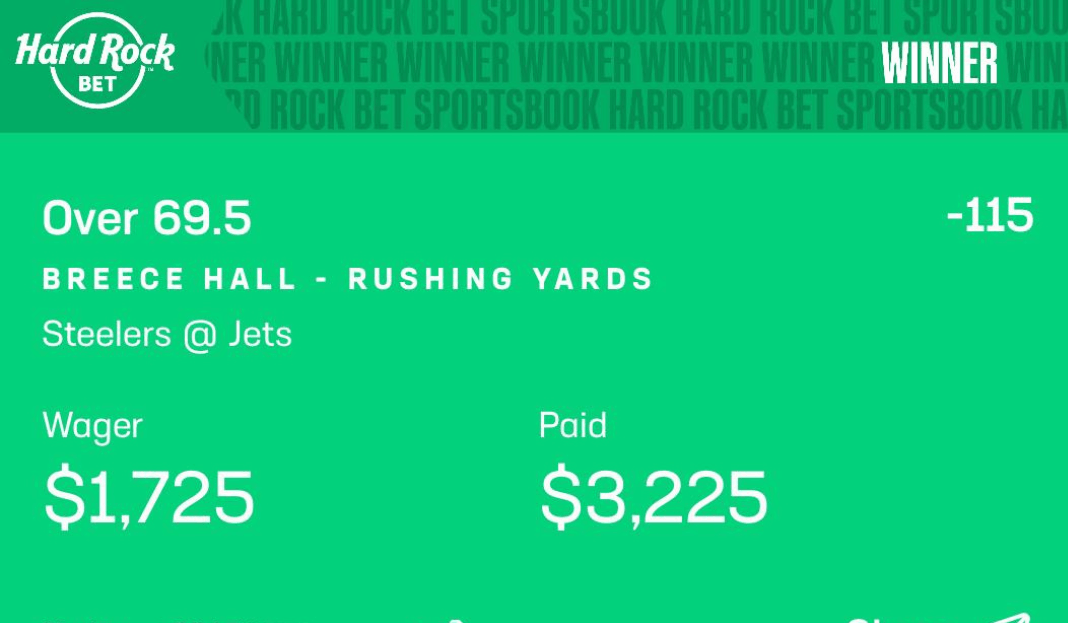
Start My Free Week →Breece Hall over 69.5 rushing yards, live. Focal point identified, game script favoring the ground game, derivative number within range. $1,725 → $3,225. Not a screenshot of someone else's slip. Ours.
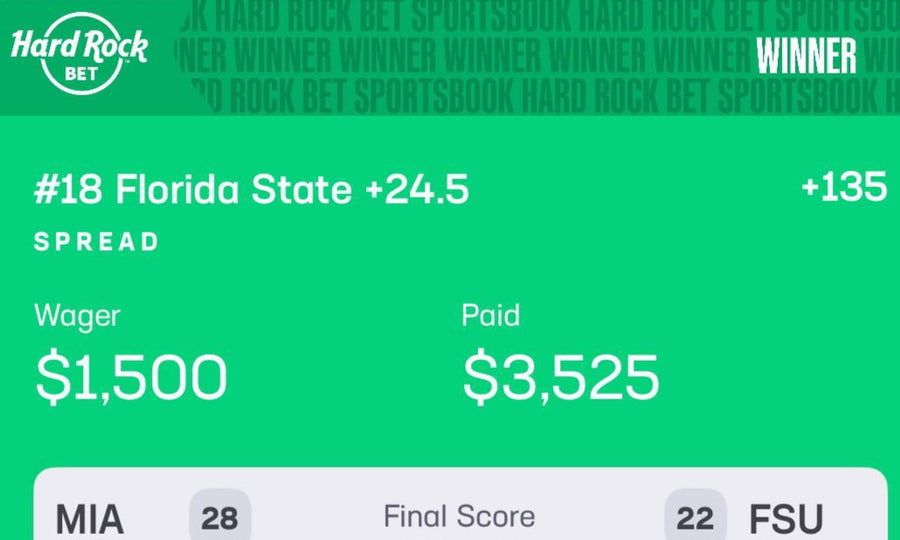
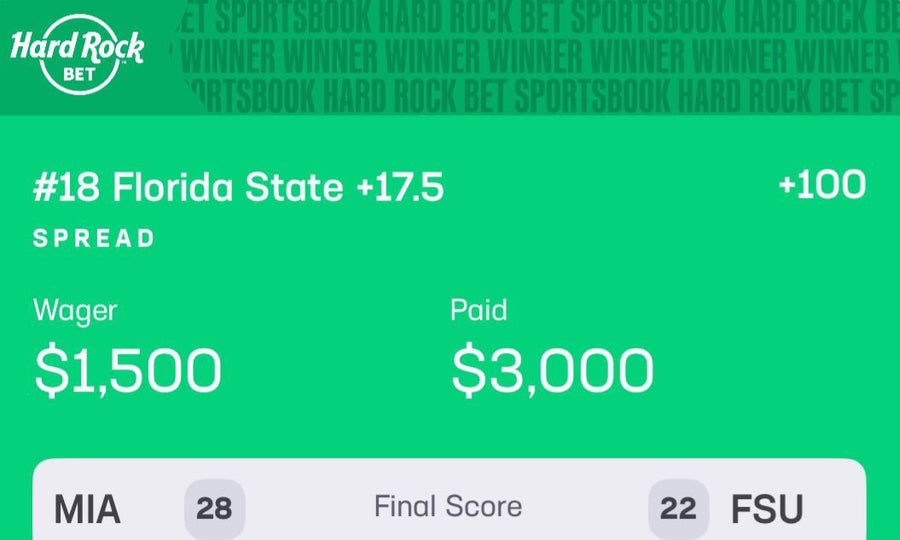
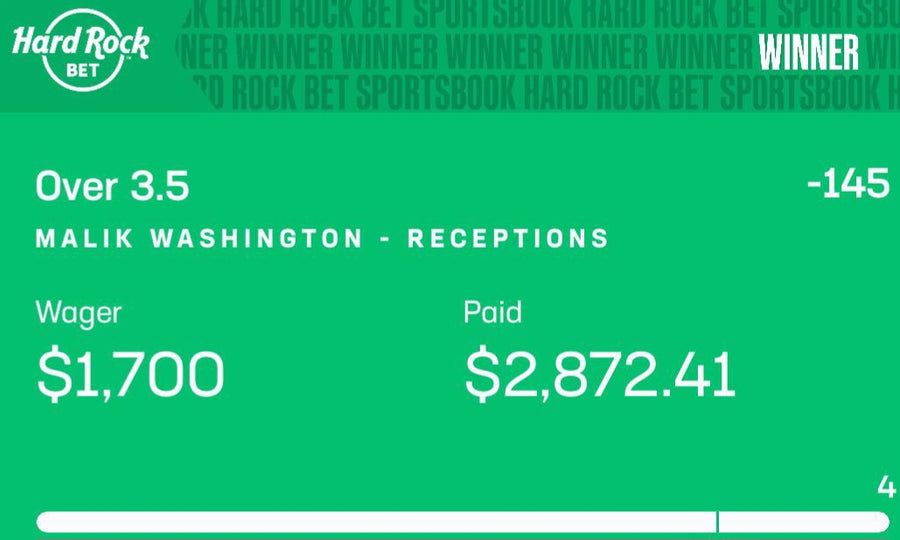
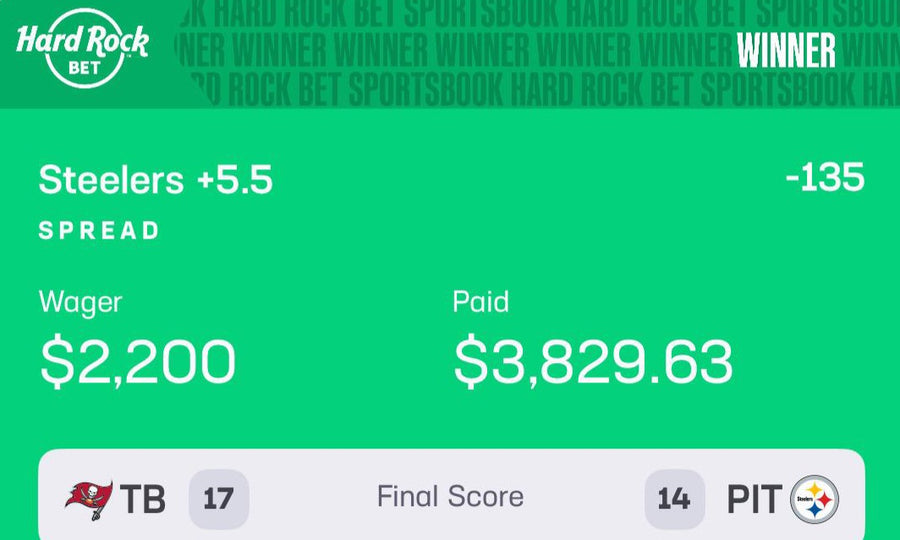
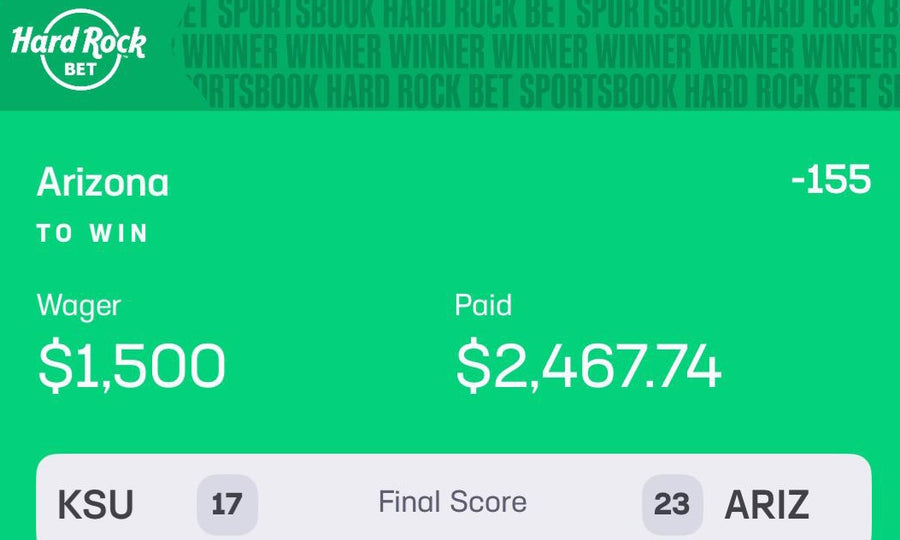
The complete course, the betting tools behind the framework, the full 757-bet audit, and every call posted live — take the same plays if you want to.
7 Days Free — Cancel Anytime →Tail every call in real time — NFL, CFB & NBA, posted with timestamps. Plenty of members never even open the course.
The course, the tools, and the livestreams teach you to make the calls yourself. Become the friend everyone texts at halftime.
Basketball — The Same Spine, Three Steps
Basketball runs the exact same process as football: skip the first half, let the score tell you what each team has to do, find the market that fits, and bet only when everything agrees.
The difference is where the edge shows up. In the NBA it appears late in the game, in games that stay close, when the ball goes to the best player on the floor — for shots, or for free throws in crunch time. The three conditions below tell you when that moment has arrived.
No first-half bets. By the fourth quarter the rotations are set, the urgency is real, and the stars are on the floor. In a close finish the ball goes to the best player — that late-game situation is the one you bet.
A 6–10 point margin is the sweet spot. The game is close enough that the stars stay in and both teams keep competing, but separated enough that you can predict what each team will do next. A blowout pulls the stars. A dead-even game makes every number a coin flip.
Do not bet a star to go get points. Wait until the player is one to three points away from the number, then bet them to finish what they have almost completed. You're not betting on a 20-point night. You're betting on the last two points of one.
A star carrying four or five fouls sits on the bench until the final minutes. If your player is in foul trouble, the late-game situation you are counting on may never come. Skip it.
When a game gets out of reach, the starters get pulled and the minutes stop meaning anything. Garbage-time numbers do not reflect the read you built. No bet.
NBA, NFL and CFB calls posted live, the course that teaches the read, and the tools behind every trigger.
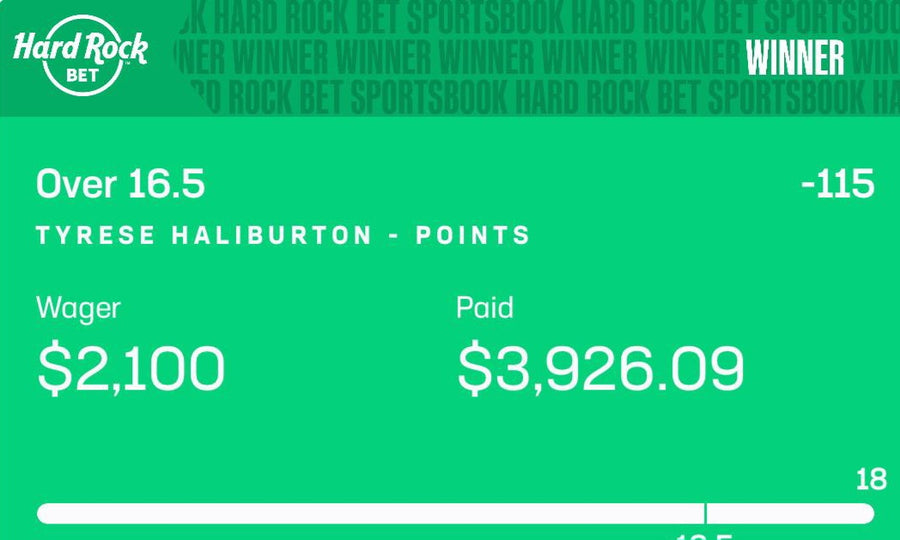
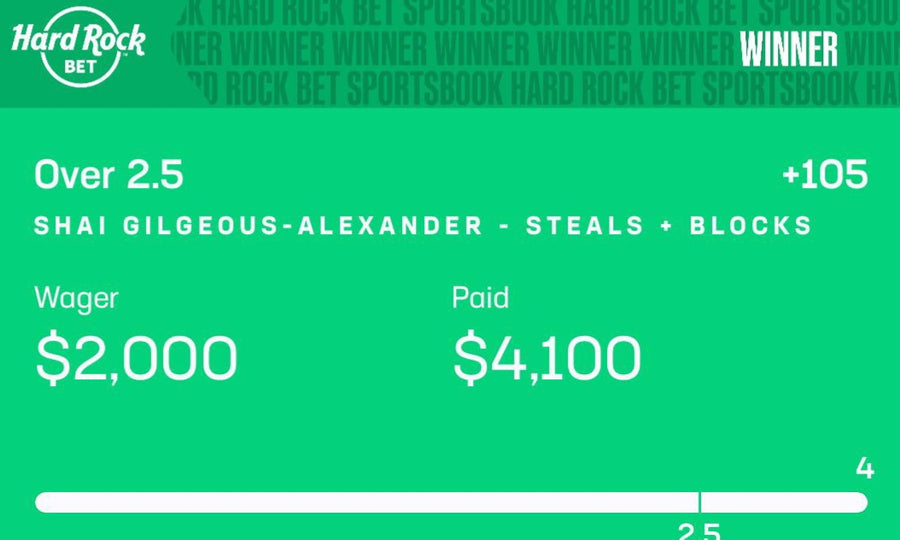
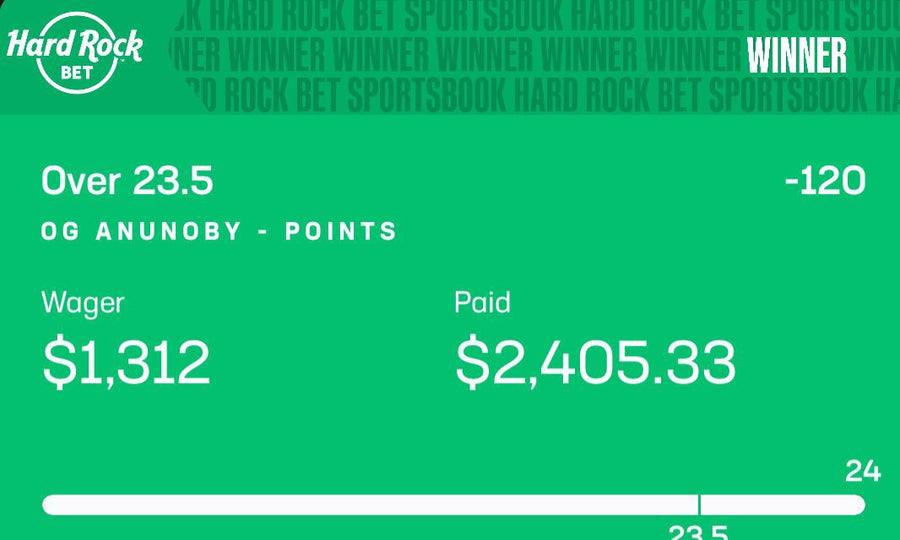
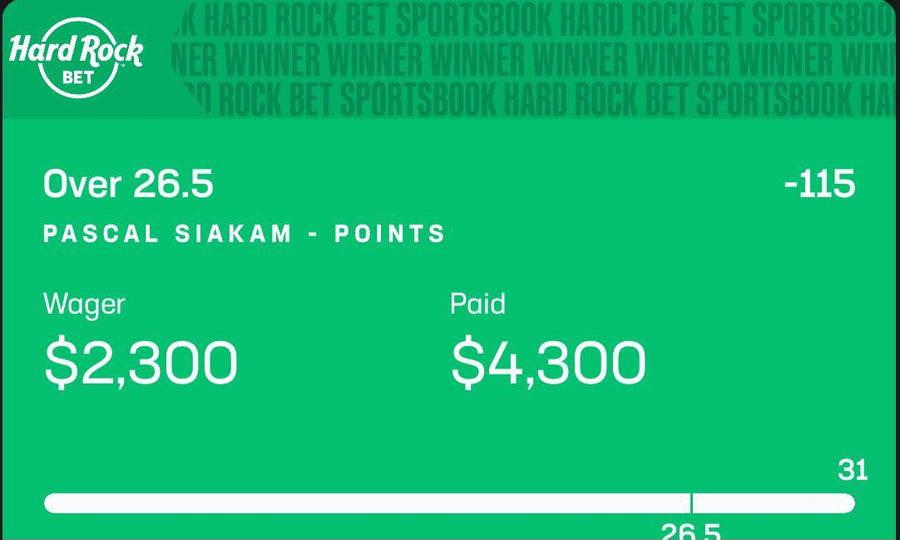
Try the Vault — 7 Days Free →De'Aaron Fox over 17.5 points, live. Fourth quarter, a game inside the window, Fox already within range of the number. $2,193 → $3,947. Same checklist, different sport.
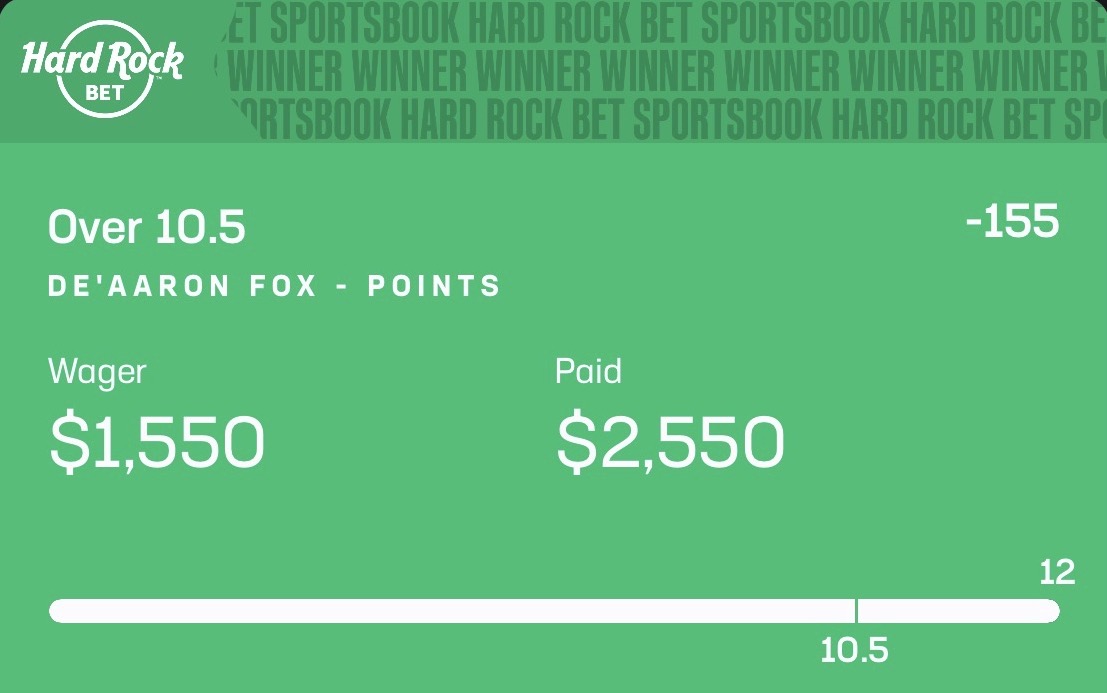
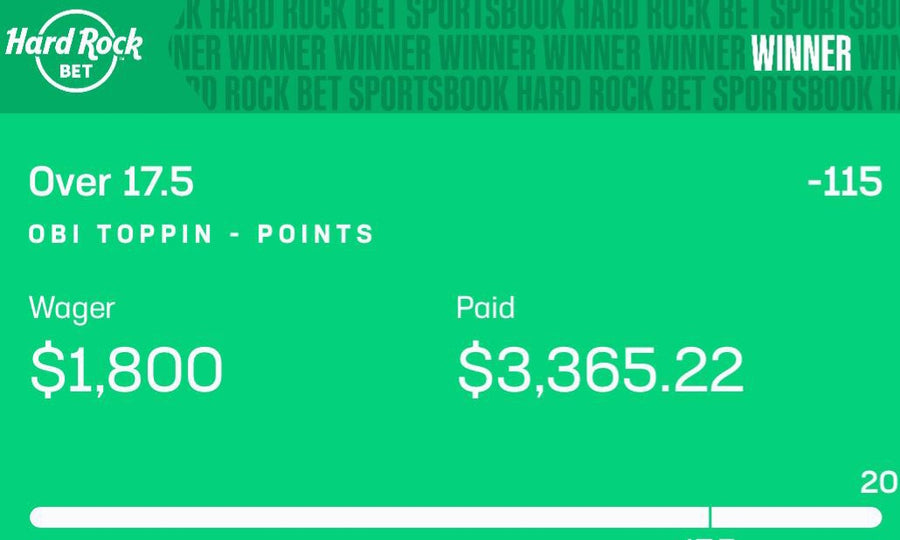
Join the Vault for live calls across NFL, CFB and NBA, the full course, the betting tools, and the complete audit behind every number on this page.
Start for Free →Built on Football.
Refined by Data.

I'm David. I played both ways in high school — quarterback and safety — then took it to the college field. When you've lived inside a game plan, you do not watch football like a fan. You see the adjustments, matchups, and pressure points developing before the broadcast explains them.
I also studied finance and statistics and spent years analyzing stocks, crypto, and the way markets react when information, momentum, and risk begin to shift. Sportsbooks and financial markets are not identical, but the discipline is remarkably similar: build the thesis, wait for confirmation, manage the downside, and never force a trade.
The Perfect Play was built by combining those two perspectives — understanding what is happening inside the game and treating every wager like a disciplined market decision. The edge is not knowing more than everyone else. It is having the patience to skip the play that is almost right and wait for the one that is.
Half our members are here to take my picks and nothing else — and that works. The other half are here to learn the system and run it themselves. Both halves will tell you the game-day livestreams are sometimes better than the games themselves.
The framework is built on the same fundamentals disciplined traders use: form a plan, wait for confirmation, manage risk, and execute only when the setup aligns. No discipline means no edge — no matter how good the original read.
The Perfect Play doesn't show up every game.
But when the triggers line up — the closing minutes, the right game, every box on the checklist checked — that's the Perfect Play. Everything in this guide is teaching you to wait for that moment. The Vault is where you'll be watching when it comes.
Course, tools, the complete audit, and every live call from day one. Cancel anytime — the next Perfect Play is already forming.
Start My 7-Day Trial →What happens after the 7 days?
Do I need a specific sportsbook?
How do the picks come through?
I'm brand new — is this over my head?
Disclaimer — For entertainment and educational purposes only. Betting involves risk; past performance is no guarantee of future results. Not financial advice. Bet responsibly, within your means.